The Pivot: Why I Dropped a Marketplace for a Cashback System
Two months is a long time to go quiet when you’ve been publishing three times a week. If you’ve been following since CI/CD in the Home Lab, you had every right to wonder whether the story ran dry. It didn’t. I ran into a moment that needed more thinking than writing—and over the years I’ve learned to respect those moments instead of filling them with noise.
What happened: I changed projects. And in the process of changing projects, I questioned everything else around it—and simplified most of it.
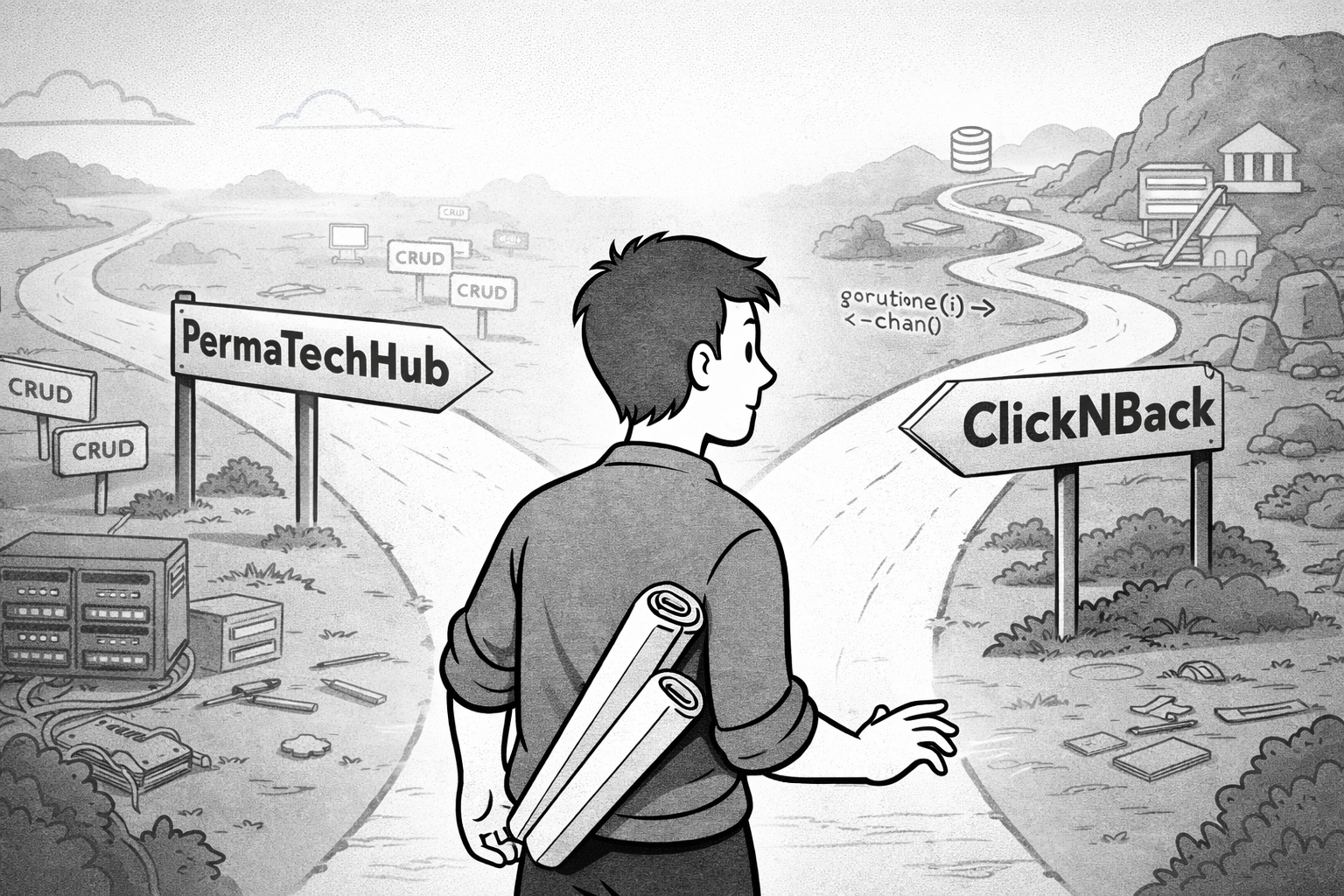
When You Build the Wrong Thing, Correctly
PermaTechHub was a genuine idea. A marketplace for sustainable tech, built around values I actually hold. I spent months on it—writing architecture decision records, designing data models, building incrementally toward something real. The discipline was genuine. The problem was subtler: the most interesting backend challenges I’d set out to tackle were still months away on the roadmap. What I was actually building in the meantime was CRUD wrapped in a sustainability narrative.
Honest work, solidly executed—but not a fair window into how I think under real pressure. There’s a version of this project I could have shipped and been proud of. But it wasn’t going to be the clearest demonstration of what I’m capable of, and when that gap got loud enough, the decision made itself.
Why Cashback? Because I Already Knew the Terrain
The answer wasn’t the result of a structured search. A few years ago, I spent a year as an iOS developer at a cashback startup. I built the app—shipped features, owned the user experience, watched the adoption numbers. But I also spent that year working alongside a backend team handling the hard parts I never had to touch: wallets that had to balance to the cent, purchase reconciliation flows running overnight, payout jobs that had to be idempotent and auditable. I was always curious about that work. I just wasn’t the one doing it.
ClickNBack is my chance to do it properly. It’s a production-grade cashback platform backend—already live at clicknback.com, built with FastAPI and PostgreSQL, continuously deployed, and structured around every constraint that makes financial systems genuinely interesting. The next post will give it a full introduction. If you can’t wait, the GitHub repository has everything—product specs, architecture decisions, the full roadmap.
Cutting What Wasn’t Earning Its Keep
I also shut down the home lab. Proxmox, K3s, self-hosted runners, local registry—all of it. Writing those posts was some of the most enjoyable work I’ve done on this blog, and the learning was real. But one day I noticed I was spending more mental energy on infrastructure decisions than on the product I was supposed to be building. That imbalance is a warning sign worth taking seriously.
ClickNBack runs on a single VPS with Docker Compose. CI/CD is entirely GitHub Actions. The simpler the operational surface, the wider the space for the work that actually matters.
On Using AI—Said Once and Clearly
I couldn’t have pivoted at this pace without AI tools, and I won’t pretend otherwise. Python isn’t where I spent the last four years. And yet I’ve been shipping tested, production-quality backend code week after week, in a stack I’m still actively learning. Three years ago that would have required either a full team or a ramp-up I couldn’t afford.
What AI doesn’t provide is judgment. It can’t tell you whether a feature belongs in the system before working out how to build it. It can’t weigh a wallet state model against a payout concurrency bug and know which one matters more this sprint. The engineers who stay genuinely valuable are those who treat code as a means to a product outcome—who reason from user needs backward through architecture, and use code because it’s the most precise tool for expressing a solution. AI amplifies that capacity. It doesn’t substitute for it.
Once a Week, From Here
Going forward: one post per week. The goal is to build something real and reflect on it honestly—not to fill a publishing calendar. If you’ve been here since December, thank you for sticking around. The most interesting part is just getting started.