What Makes a Senior Engineer: A New Year Reflection on Growth Beyond the Stack
The first day of the year always brings a sense of possibility—a clean slate, a moment to pause and ask what really matters before the rush begins again. For me, January 1st isn’t just about resolutions or goals; it’s about reflection. What have I learned, and how do I want to grow next?
If you read my year-end reflection (Built on the Shoulders of Giants), you already know how much I value the people and lessons that shaped my journey. This post is an attempt to distill what I believe truly makes a senior engineer, after years of learning from the best.
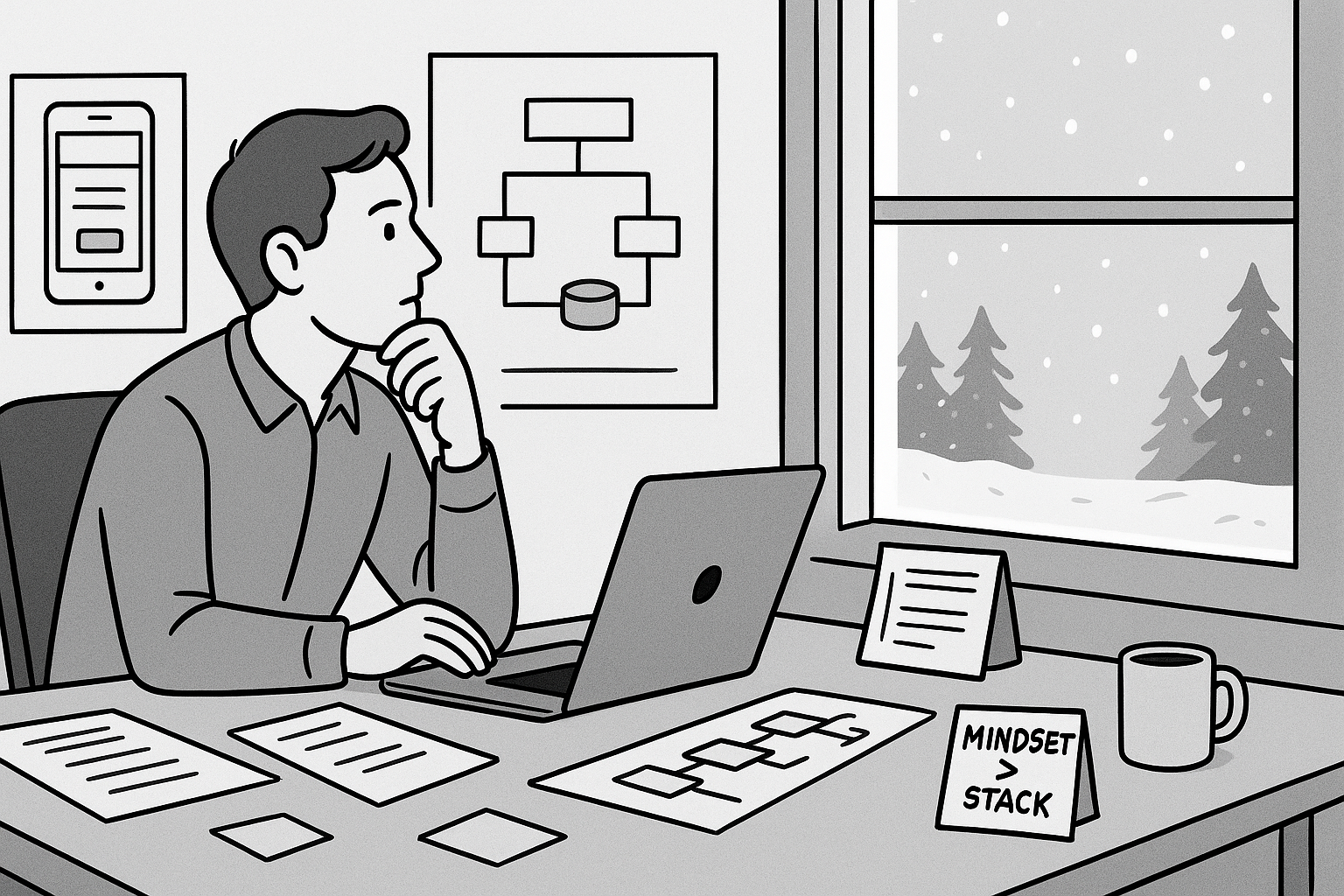
When Someone Puts Words to Your Unformed Thoughts
There’s something fitting about starting a new year by questioning everything you thought you knew about your career. As I look ahead to 2026 and reflect on the sabbatical journey I’ve been sharing here, one question keeps surfacing: what actually makes someone a senior engineer?
The question wasn’t new—it had been forming in my mind for some time, shaped by watching teammates like Petre balance leadership with trust, or Rebeca align vision with reality, or Teo and Angel debate architectural trade-offs with the bigger picture always in view. I could see patterns in how the best engineers worked, in what made them valuable beyond their technical chops. But I couldn’t quite articulate what I was seeing.
Then I watched a video by Emilio Carrión (in Spanish) that gave language to those vague observations. It crystallized something that had been there all along, learned through osmosis from the teammates who shaped me—but now I could finally name it. And that clarity is reshaping not just how I think about my sabbatical, but how I’m approaching the year ahead and what I’m actually building toward.
What Seniority Really Means
The video argued that real senior engineers share three core competencies: product mindset, architectural pragmatism, and stakeholder management. Not years in a specific stack. Not certifications. Not even deep technical expertise in the latest framework.
After four years at a major product company, I realized something both encouraging and humbling: I’d been moving in that direction. I’d shipped features at scale, navigated complex organizational dynamics, and started learning to balance technical excellence with real business constraints. But I wasn’t there yet—not in the way I’d witnessed in teammates who truly embodied that seniority. And here’s the twist: most of that learning had happened as a mobile engineer, and my attempt to transition to backend had left me burnt out and questioning everything.
As I shared in my earlier posts about taking a sabbatical and building with intent, that burnout pushed me to press pause. But it also raised a thorny question: where do I fit when I return to the job market? I’m not a junior backend engineer starting from scratch—but I’m also not yet the senior backend engineer I aspire to be. I’m somewhere in between, with transferable skills but without the proven track record in this domain.
The Path to Consolidating Seniority
Here’s what I’ve come to understand: seniority isn’t a binary state tied to a single technology. It’s a mindset and skill set that transcends stacks. The product thinking I started developing building iOS features at scale? That should apply to backend services. The architectural pragmatism I began learning making trade-offs under pressure? That’s universal. The stakeholder management skills from navigating organizational complexity? Those work anywhere.
But knowing they should transfer and actually proving I can apply them in a new domain are two different things. That’s where my PermaTechHub project comes in. It’s not just a learning project—it’s deliberate practice aimed at consolidating that seniority in backend engineering. This is my way of bridging the gap between the direction I was heading and the engineer I want to become.
Every architectural decision, every trade-off I’m documenting on this blog, every choice about observability and maintainability—these are my attempts to demonstrate senior-level thinking in a new stack. Not because I’ve already mastered it, but because I’m committed to getting there through intentional practice.
Looking Ahead to 2026
As I prepare to re-enter the job market, I’m starting this year with clarity about what I’m looking for: organizations that value thoughtful, intentional engineering over relentless pace. I’m not saying hyper-growth startups or fast-paced environments are bad—they’re just not right for me at this stage. I’m drawn to places where “senior” means wise and deliberate, not just fast and efficient. Companies that prize depth over velocity and sustainable craft over growth-at-all-costs.
This year, my focus is on building the proof and earning that senior title. The technical work—shipping a real marketplace, documenting the process—that’s all happening. But equally important is demonstrating through action, not just words, that I can bring senior-level thinking to backend engineering. Maybe I’m still not there, but I’m deliberately working to get there.
Real seniority isn’t about what you’ve done—it’s about how you think. It’s about understanding user needs, making pragmatic architectural choices, and managing stakeholders across the organization. Those are the skills I saw in my teammates, the patterns I absorbed, and now I’m working to consolidate them through practice in a new domain.
My sabbatical isn’t about starting over, but it’s also not about claiming I’ve already arrived. It’s about taking the foundation I built in one domain and deliberately strengthening it in another—using 2026 to close that gap between aspiration and reality. If you’re starting this year with your own career questions or transitions, I hope this reflection helps you see that growth is a journey. Sometimes it means being honest about where you are while staying excited about where you’re going.