Unwrapping the Process: How AI Helps Me Share, Not Just Write
If you’ve been following along since my last posts, you already know I’m not shy about using AI as a partner in my learning journey. But since it’s Christmas—a time for sharing what’s behind the scenes—I want to unwrap how these posts actually come together, and why the real magic isn’t in the words themselves.
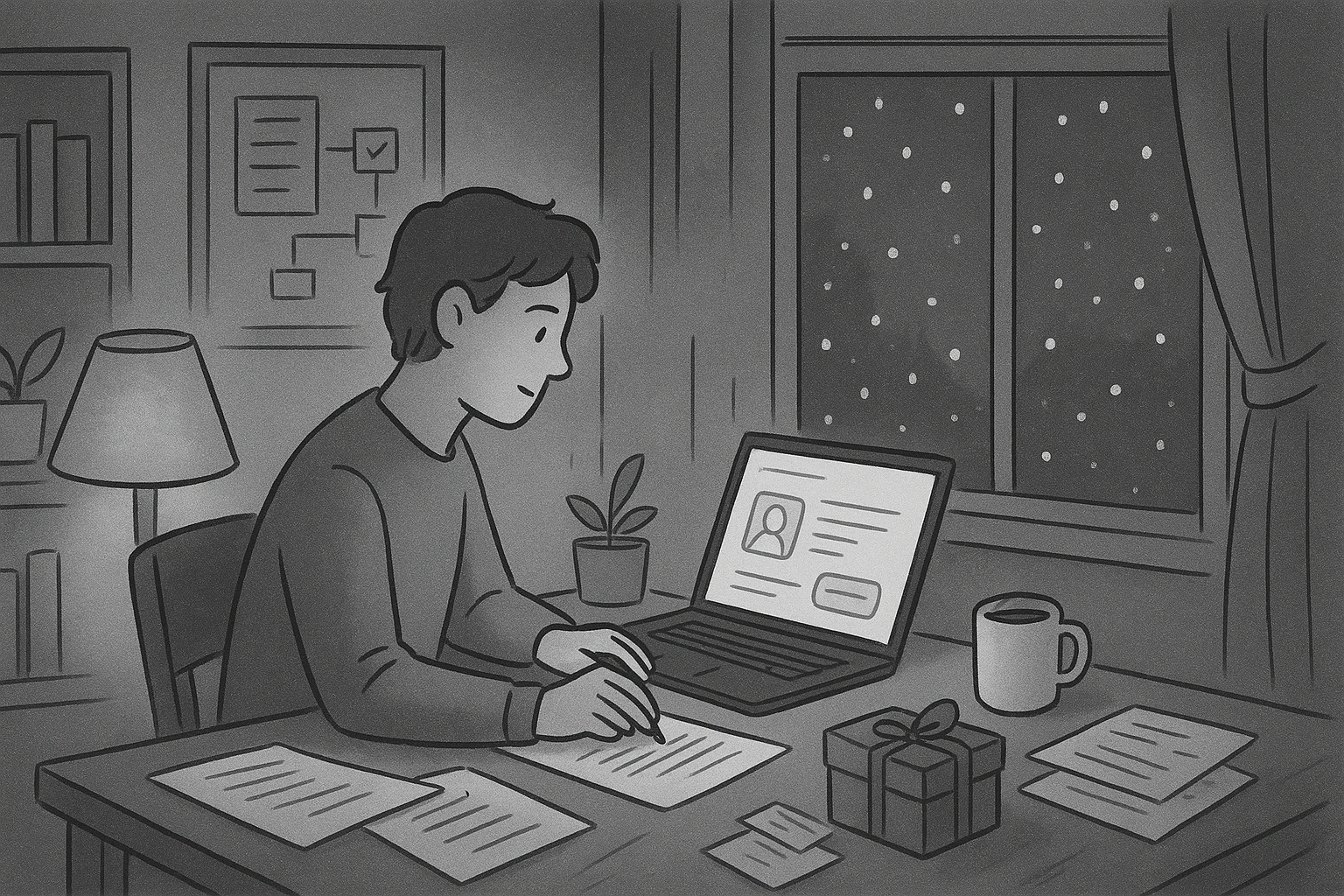
From Messy Ideas to Shared Thoughts
Many posts you read here starts with learning. When I’m exploring a new topic—maybe backend design patterns, or the ever-expanding Java ecosystem—I don’t just Google and hope for the best. Instead, I open a long, meandering conversation with an AI assistant. I treat it like a whiteboard session with a very patient (and occasionally quirky) colleague.
The early exchanges are messy: “How should I approach this? Why does this matter? Am I missing something obvious?” It’s less about getting the “right” answer and more about expanding my field of view. But here’s the key—for this process to really work, you need a healthy dose of critical thinking. I make a point to challenge suggestions, ask for alternatives, and double-check anything that feels off. The goal isn’t to let the AI lead, but to use it as a sounding board that pushes me to clarify my reasoning and spot my own blind spots.
What’s surprised me most is how much these conversations help me clarify my own thinking. I start with a vague idea, and by the end, I’ve mapped out the pros, cons, and trade-offs.
Now the truth is AI tends to agree with you more than it should. Getting objective answers—especially ones that challenge your biases—is tricky. The AI wants to be helpful, which often means it’ll validate your ideas rather than poke holes in them. That’s why the critical thinking piece is so important. I’ve learned to actively push back on its responses, demand alternatives, and explicitly ask it to challenge my assumptions. Instead of passively absorbing information, I’m actively shaping it—documenting my preferences, motivations, and the “why” behind my choices. The AI becomes a mirror, reflecting my reasoning and helping me spot gaps or contradictions—but only if I do the work of looking critically at what’s reflected back.
By the time I sit down to draft a post, I’ve already hashed out the context, goals, and story in conversation. It’s time to ask the AI to draft a summary of our entire conversation—gathering all the ideas we considered, how they flowed, and what stuck. That becomes the first draft. But then comes the real work: proofreading, adjusting, fixing, adding missing ideas, removing irrelevant ones, tweaking the style here and there. This part takes time, but it’s what makes the final result a genuine reflection of what I want to express.
A Paradigm Shift, Not a Replacement
Maybe the style isn’t that original—I’ll admit that freely. But the ideas, insights, and opinions are all 100% genuinely mine. The process of “writing” a post is radically different from the traditional approach because the tools have changed. Yet I honestly think the value is still there, at least for this kind of blog. Writing as a piece of art is different, of course—but that’s not what 90% of people need when they share by writing.
I know some people avoid or even dislike AI-assisted work. From my point of view, what’s often missed is the paradigm shift at play. It reminds me of the leap from handwriting to the printing press—a change that wasn’t about replacing one with the other, but about opening new doors. The press didn’t make handwriting obsolete; it simply made it possible for more people to share their ideas, faster and farther than ever before.
The same happened with the internet: suddenly, voices that might have gone unheard could reach across the world. AI is just the next step in that evolution. It’s not about which method is “better”—each serves its own purpose. But with AI, I can shape and share my thoughts more freely, and maybe help others do the same.
And honestly, it wouldn’t have been possible to share this story in real time as my project progresses without AI assistance. The speed at which I’m learning, the pace at which decisions are made, the volume of thoughts and reflections—trying to capture all of that manually, with traditional writing methods, would have meant either sacrificing the project’s momentum or letting these moments slip away undocumented. AI lets me keep both: the forward motion of building and the backward glance of reflection.
The Gift of Imperfect Sharing
Especially at Christmas, it feels right to focus on what’s being given, not just how it’s packaged. The value in these posts isn’t in perfectly crafted sentences (though I do try!). Sometimes, I realize the text might sound a bit AI-ish, and sure it won’t win any prizes for originality—but honestly, that’s not what matters most to me. As long as the ideas come through, as long as something useful or honest is shared, I’m happy to let a little imperfection show.
It’s in the hope that sharing my process—warts, doubts, and all—might help someone else find their own way, or at least feel a little less alone on the journey. So as you read this, know that what you’re getting isn’t an AI-generated artifact. It’s a conversation, a reflection, and a small gift from one learner to another. And if you’re curious about how AI might help you shape your own ideas, I hope you’ll give it a try—not for shortcuts, but for the joy of discovery.
Merry Christmas, and thanks for being part of this story.
📢 Housekeeping Note: After this post, I’ll be taking a short publishing break to recharge and plan what’s next. I’ll be back on January 1st with fresh insights and new adventures. See you in the new year!