PermaTechHub: Building a Marketplace That Mirrors Its Values
🚨 Long Post Alert.
This is longer than my usual fare. Grab a coffee, settle in, and let’s dive deep.
Over the past few posts, I’ve been sharing the philosophy behind my sabbatical project—from Building a Meaningful Engineering Project to exploring Computing Beyond Obsolescence. If you’ve been paying attention to the clues—mentions of community, sustainability, marketplaces, and permacomputing—you might have already connected the dots. Now it’s time to make it official and reveal what I’m actually building—the project I’ve been hinting at since When Plan A Fails.
It’s called PermaTechHub, and it’s a marketplace for second-hand technology. But before you write it off as “just another CRUD app with a marketplace theme,” hear me out. This isn’t about building yet another listing platform or checking boxes on a portfolio. It’s about creating something that reflects my values as an engineer—and proving that demo projects can be meaningful when you choose them carefully.
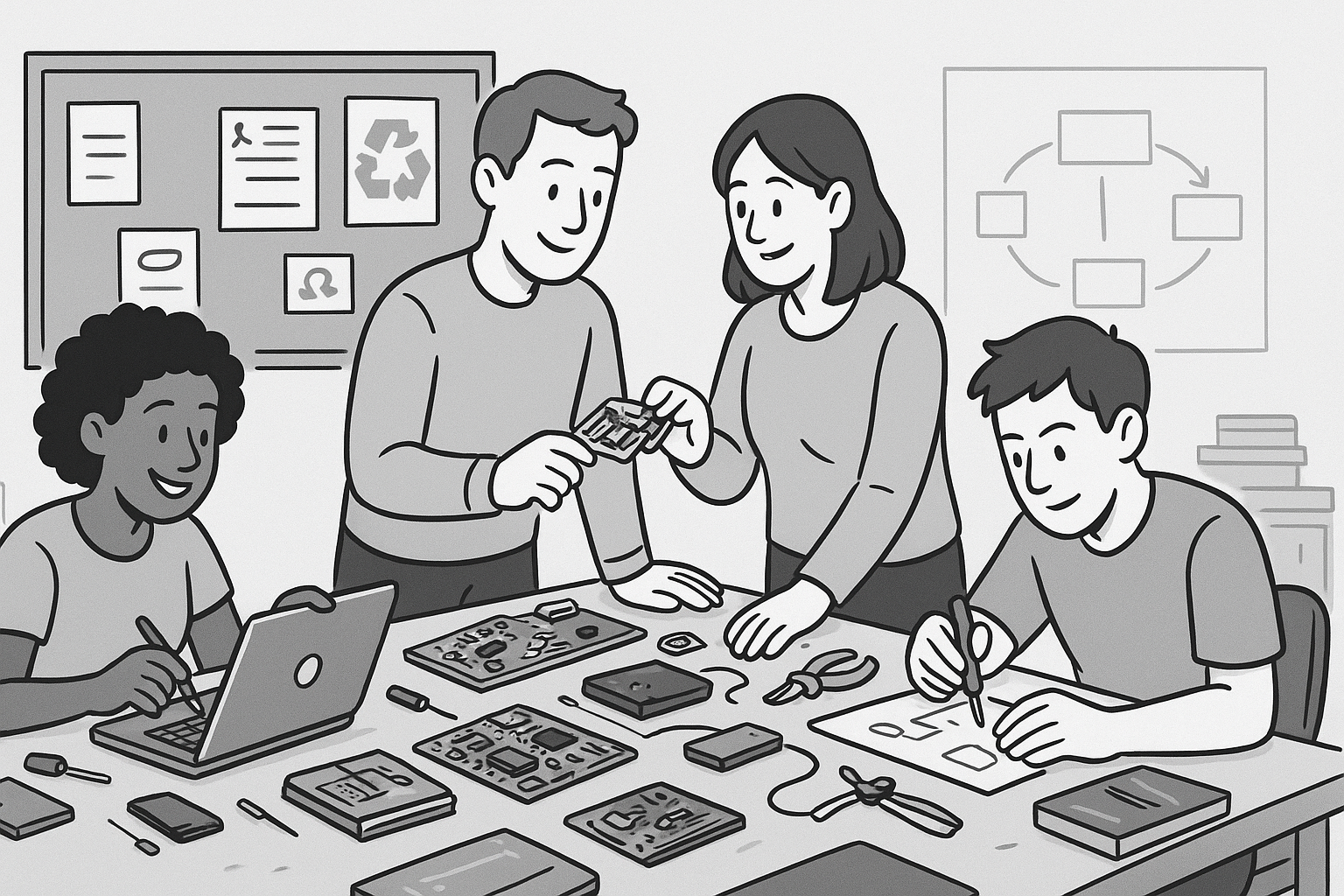
Why a Marketplace for Second-Hand Tech?
The idea came from two converging frustrations. First, as someone who’s spent the last few months rebuilding my technical foundations during this sabbatical, I needed a project with real complexity—one that would force me to think about authentication, transactions, data integrity, concurrency, and all the messy challenges that separate hobby projects from production systems.
Second, I was tired of seeing perfectly good technology treated as disposable. I’ve watched capable machines get tossed aside because they couldn’t run the latest OS, or because a single component failed and replacement parts were impossible to find. The tech industry’s obsession with the new has created this weird paradox: we build increasingly complex systems to manage scale and resilience, while treating the hardware that runs them as inherently temporary.
A marketplace seemed like the perfect vehicle to explore both concerns. It’s a deceptively simple concept that hides real-world complexity—users, listings, search, trust, payments, moderation. It touches every layer of the stack and forces you to think holistically about security, scalability, and user experience. And by focusing on second-hand tech, I could build something aligned with the permacomputing principles I’ve been exploring—where technology is valued for its longevity, repairability, and enduring usefulness.
The Mission: More Than Just Transactions
PermaTechHub exists to empower users to buy, sell, and repair second-hand technology, fostering a culture of sustainability, resourcefulness, and learning. It’s not just about facilitating transactions—it’s about building a community around the idea that technology can (and should) last.
The platform encourages reuse and restoration of tech, helping reduce e-waste and promoting long-term thinking about our digital tools. I want to make second-hand tech accessible, encourage repair and creative reuse, and support meaningful connections among enthusiasts worldwide—with a special focus on the Spanish and European communities, where I’m based and where I see a real gap in the market.
By keeping technology in circulation and sharing knowledge, the goal is to preserve the foundations of digital culture, reduce environmental impact, and inspire future generations to value resourcefulness and sustainability.
The Vision: Building a Community, Not Just a Platform
Here’s what I kept running into: existing platforms for buying and selling tech are either too generic (everything from phones to furniture, with no sense of specialization) or too corporate (optimized for volume and revenue, not for community or repair culture). There’s no central hub where second-hand tech enthusiasts can come together not just to transact, but to collaborate, learn, and share.
PermaTechHub aims to fill that gap. It’s a vision of a vibrant, central hub where people can buy, sell, repair, and share their passion for technology that lasts. It’s about building a lasting community around sustainability, resourcefulness, and shared knowledge—supporting local economies and fostering cultural connections.
Think of it as the intersection between a marketplace, a repair community, and a knowledge base. A place where you can find that rare replacement part for your ThinkPad, learn how to reflash the BIOS, and connect with others who see value in keeping technology alive.
What Makes PermaTechHub Different
PermaTechHub isn’t trying to compete with eBay or Facebook Marketplace on volume. Instead, it focuses on four core pillars that reflect what a sustainable tech community actually needs:
Marketplace: The foundation—buy and sell second-hand tech items, parts, and tools. But with features tailored to enthusiasts: detailed specs, compatibility information, condition ratings that actually mean something, and seller reputation built around transparency and honesty.
Repair & Reuse Hub: A dedicated space to share repair projects, guides, permacomputing resources, and creative reuse ideas. This is where the community becomes more than just buyers and sellers—it’s where people share what they’ve learned, document their successes and failures, and help each other keep technology running.
Community: Forums, messaging, and events for sustainability-minded enthusiasts. The social fabric that turns a transactional platform into something people actually care about and return to. A place to ask questions, share discoveries, and build relationships.
Knowledge Base: Curated articles, tutorials, and documentation on repair, permacomputing, and long-term tech use. Not user-generated chaos, but carefully organized resources that help people learn the skills they need to maintain and extend the life of their hardware.
Together, these features create an ecosystem—not just a marketplace, but a destination for people who believe technology deserves better than planned obsolescence.
The Engineering Mirror: When Architecture Reflects Values
Here’s where PermaTechHub gets interesting from an engineering perspective. If I’m building a platform about technology that lasts, shouldn’t the engineering reflect that same philosophy?
That’s exactly what I’m doing. The technical foundation of PermaTechHub is designed with the same principles that guide the product: reliability over bleeding-edge frameworks, maintainability over clever abstractions, security and data integrity from day one.
I’m prioritizing transactional safety because a marketplace involves money, trust, and sensitive user information—getting this wrong isn’t just a bug, it’s a breach of trust. I’m emphasizing modularity so the codebase can evolve over time without collapsing under its own weight. I’m treating documentation as a first-class concern, not something to bolt on later, because sustainable systems are understandable systems.
The platform incorporates modern engineering practices—automated testing, CI/CD pipelines, comprehensive monitoring—not because they’re trendy, but because they support operational excellence and long-term maintainability. These are the disciplines that separate hobby projects from production systems, and I want to practice them deliberately.
This parallel between product values and technical architecture is something I don’t see often in demo projects. Most portfolio pieces are about showcasing technical skills in isolation. PermaTechHub is about showing how technical choices can embody principles—how the way you build something can be as meaningful as what you build.
The Technical Foundation: Choosing Tools That Last
For the backend, I’m using Java and Spring Boot—a choice that might seem surprising in 2025, but one that reflects the same philosophy as the product itself. I’ll be diving deep into why I chose Java soon, but the short version is: I wanted tools that prioritize stability over hype and proven patterns over constant reinvention.
For persistence, PostgreSQL provides the ACID compliance and data integrity that a marketplace demands. For deployment, Docker ensures consistency across environments (something I learned while Shipping a Blog with Real DevOps). And CI/CD pipelines will be there from the start, not bolted on later as an afterthought.
I’m also committed to comprehensive testing—not just unit tests, but integration tests, contract tests, and eventually even some chaos engineering to see how the system behaves under stress. This is where my gaps in backend engineering become opportunities to learn properly, building the kind of test-driven discipline I’ve admired in senior engineers.
Scope and Reality: Building With Intent, Not Haste
Let me be clear about what this is: PermaTechHub is a learning project and portfolio piece, not a business venture. I’m not trying to build the next unicorn or disrupt an industry. I’m building a realistic, complex backend system to practice engineering disciplines, demonstrate technical competence, and prove I can design and ship production-quality software.
The product vision matters because it gives the project purpose and context—it’s easier to make good architectural decisions when you’re solving real problems for real users, even hypothetical ones. But the goal isn’t to launch a marketplace that competes with established platforms. The goal is to build something substantial enough to force me to confront the same challenges that real production systems face.
I know, this is ambitious. Maybe too ambitious for a demo project. A marketplace with community features, repair guides, and a knowledge base is a lot to tackle alone, especially while also documenting the process and sharing what I’m learning.
But that’s exactly why I chose it. I don’t want a project I can finish in a weekend—I want something that will challenge me for months, something that forces me to think deeply about architecture, trade-offs, and the long-term consequences of my decisions. In real companies, engineers work on long-lived systems that evolve over time, where early decisions have lasting impact. That’s the kind of experience I want to simulate—building something substantial enough that I can watch patterns emerge, learn from mistakes, and refine my approach as the system grows. I want to practice the kind of engineering discipline that matters in real-world systems.
The plan is to build the MVP first: marketplace core functionality, basic authentication, listings, search, and transactions. Get that solid, deployed, and working reliably. Then iterate: add community features, build out the repair hub, curate the knowledge base. Each phase is a chance to learn something new, to refine my approach, and to demonstrate that I can ship incrementally while maintaining quality.
Will it work? Honestly, I don’t know. I might fail—hit technical walls, realize the scope is too large, or discover that what I thought was interesting is actually tedious. But I’ll document everything either way—the wins, the mistakes, the pivot points. Because even if the project doesn’t succeed, the learning is real and the discipline I’m building matters.
Who This Is For
PermaTechHub is designed for enthusiasts passionate about second-hand and sustainable technology—people who see value where others see obsolescence. It’s for permacomputing advocates, repairers, and makers interested in long-term hardware and software use. And it’s for anyone seeking a trustworthy, community-driven platform for second-hand tech and repair.
But on a personal level, it’s also for me. It’s a chance to prove I can build something meaningful, to practice the kind of backend engineering I want to be known for, and to create something that aligns with my values—not just my résumé.
What’s Next: Building in Public
From here, I’ll be sharing the journey in two streams. First, the technical deep-dives: architecture decisions, implementation challenges, lessons learned from getting things wrong. I’ll cover topics like learning Spring Boot with AI assistance, setting up robust development workflows, and all the small decisions that add up to a maintainable system.
But I’ll also share reflections on the process itself—the workflows that keep me productive, the mindset shifts that matter, and the broader questions about what it means to build with intention. Not every post will be about code; some will be about the craft of engineering itself.
This isn’t going to be a polished success story where everything works on the first try. It’s going to be messy, iterative, and real—the kind of learning that happens when you’re figuring things out as you go. If you’re curious about backend engineering, sustainable technology, or just want to watch someone try (and occasionally fail) at building something ambitious, stick around.
PermaTechHub is more than a demo project. It’s a statement about what I value as an engineer: craftsmanship over hype, sustainability over disposability, community over transactions. And it’s a bet that when you build with intention, even a “demo” can become something worth caring about.
Let’s see where this goes.